precision heat
A workshop sometimes needs a way to heat things in a precise way. Techniques of interest to me that require precise heating include the heat treatment and tempering of steel, drying/stabilizing wood, curing resin, powder coating, and the like. Some of this can be done in a home oven but some of it releases toxic chemicals that make it unsafe to use that oven for food.
Thus began the quest for a reliable, temperature-controlled, propane forge and a shop oven.
When prioritizing cost, effort, and quality, you only only ever get to pick two. I picked cost and quality which meant an expenditure of effort. A very basic propane forge can be had (or made) for under $150 and an old toaster oven can often be found for free but neither is a precision tool. The propane forge just blasts the shit out of whatever is inside the tube and the toaster oven has temperature swings on the order of ~50 degrees or more - neither on its own makes any of my intended projects easy. Thankfully, it’s pretty cheap and simple to build a PID temperature controller that will work with either heat source. Add some control valves and insulation and you can turn both into fairly precise tools.
Inkbird makes an inexpensive PID controller designed for tasks like this. I built that into a small aluminum enclosure with a 25A solid state relay, a 15A fused AC power input, AC power output, a power switch, and a plug for K-type thermocouple probes. That way, the same controller could be used for both the oven and the forge.
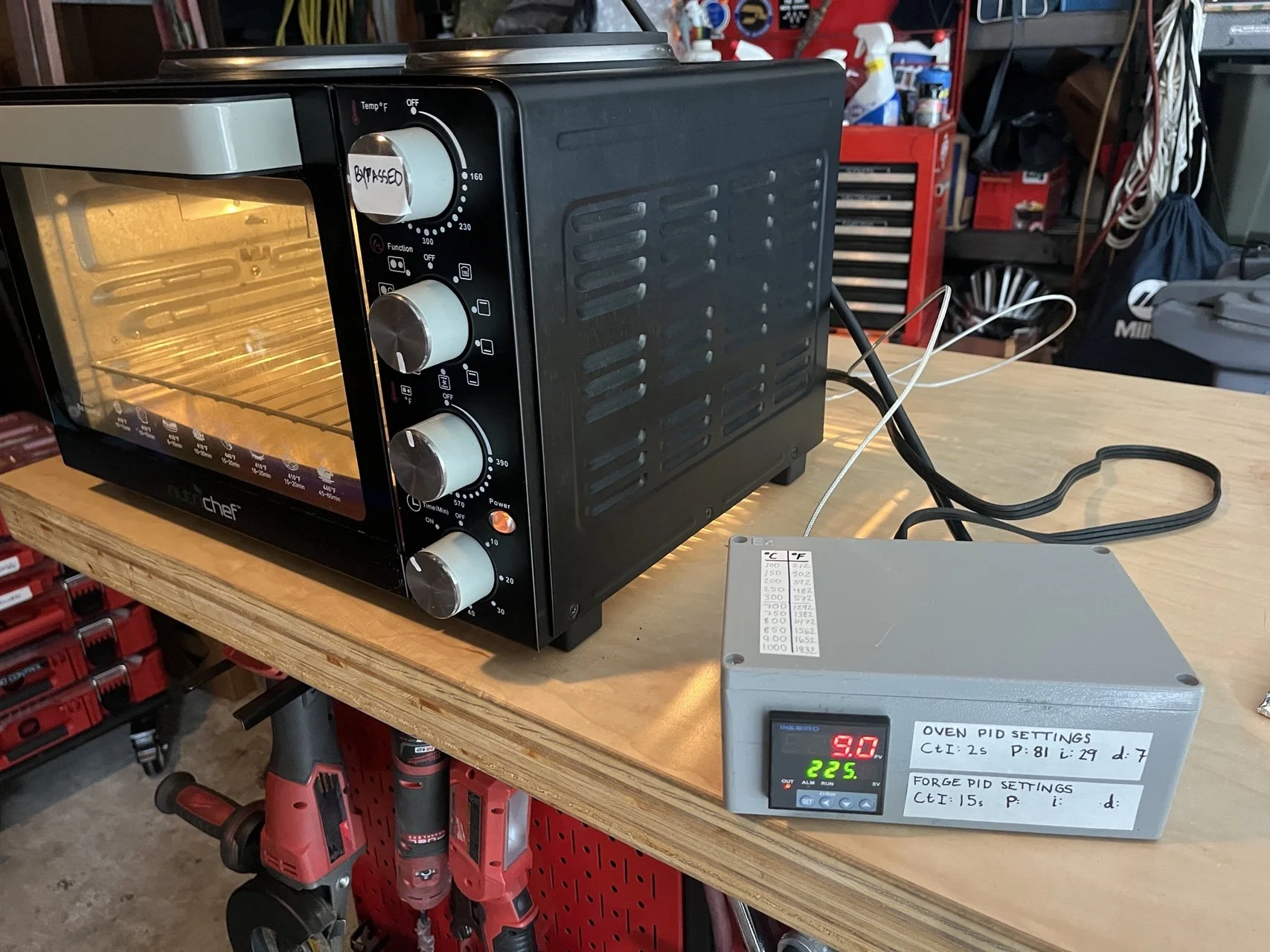
For the toaster oven, I searched local online marketplaces for a used unit that could accommodate a 12”x12” object laying flat inside on the rack and had a convection mode where a fan keeps the air moving, leading to more consistent temperatures throughout the oven. I bypassed the temperature and timer controls, filled the space between the inner wall and outer shell with some scraps of high-temp mineral insulation that I got for free off of another online ad, mounted an appropriate range probe inside the oven wall, and made a couple of 16ga aluminum plates that sit above and below the bottom and top elements, respectively. These plates shield the probe from direct radiative heat off the elements so it can take an accurate reading inside the oven and also have holes from which small items can be hung if needed. The temperature can be set to anything, even just a couple of degrees above ambient. That lets me speed up the curing of paints and resins even on a plastic substrate. It can also maintain the reliable temperatures needed for powder coating or tempering steel.
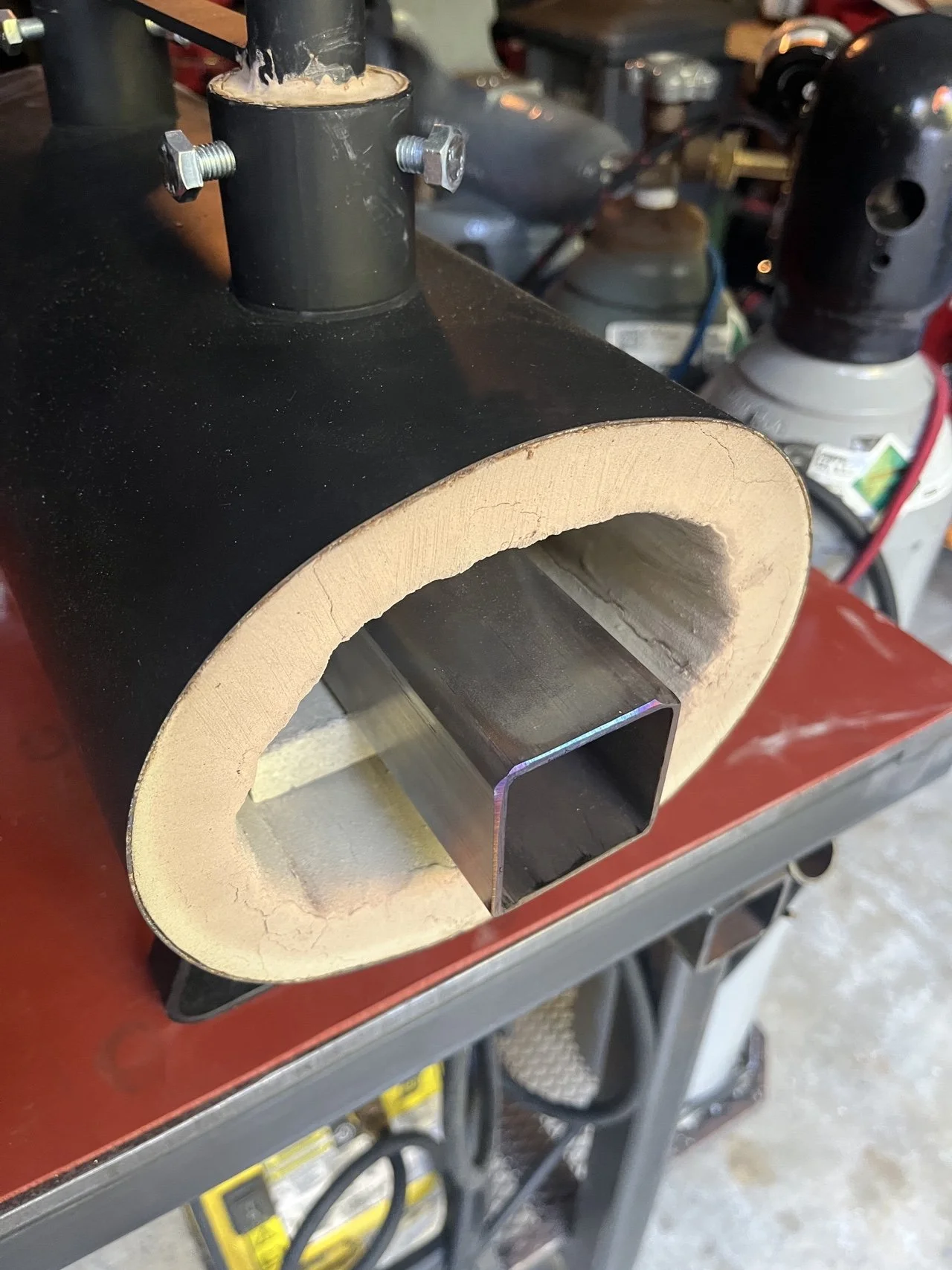
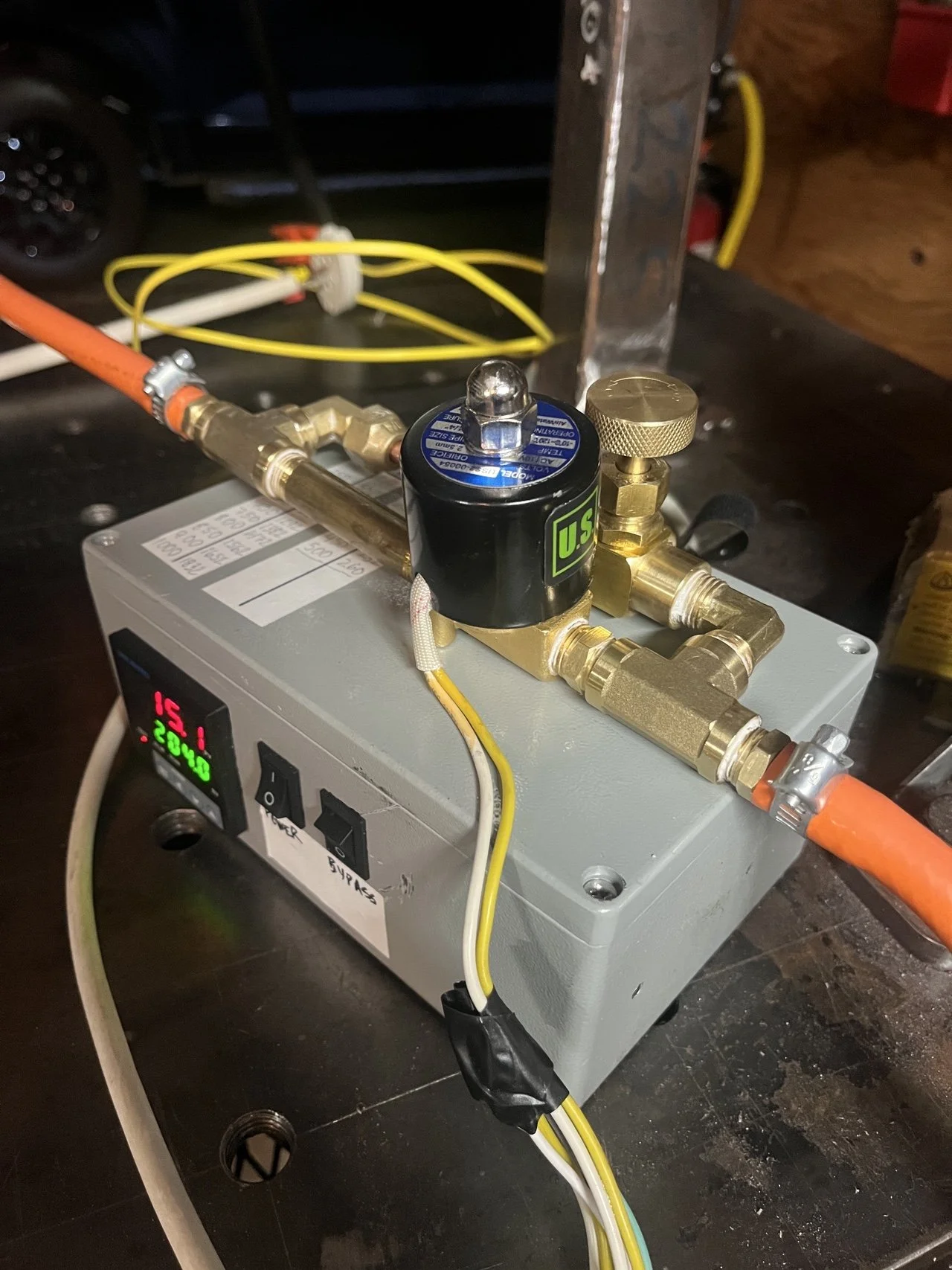
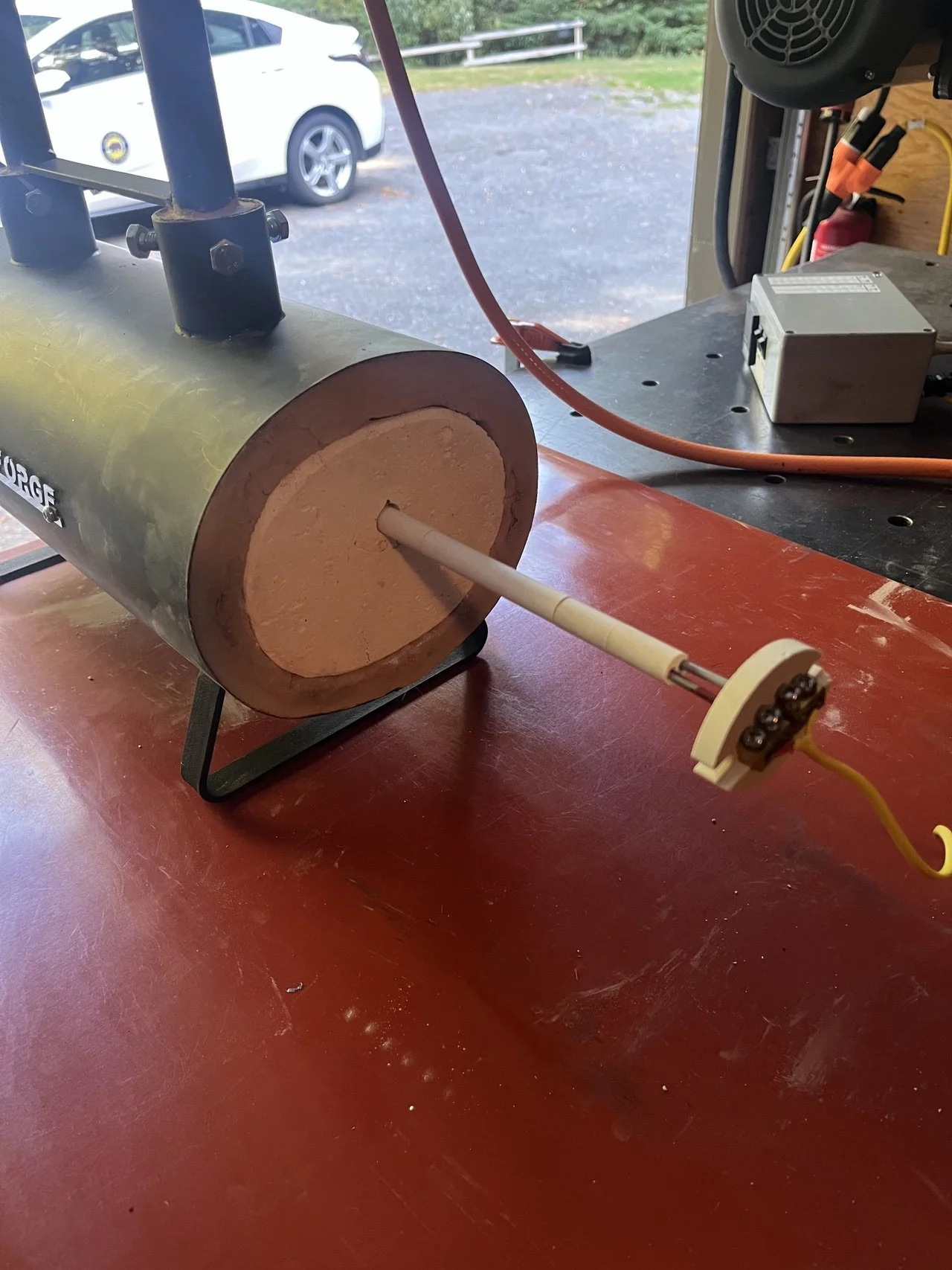
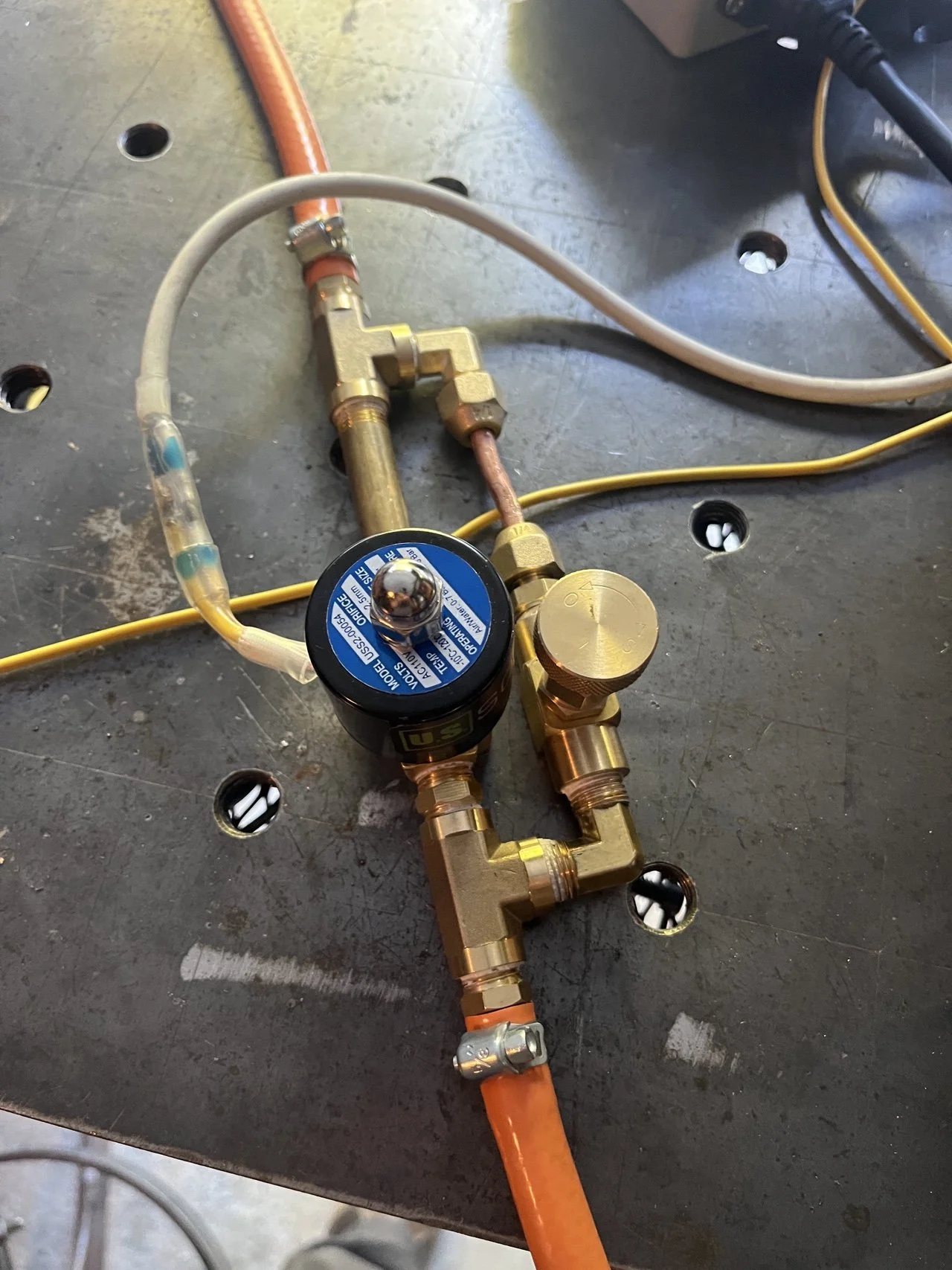
For the forge, I added a thick firebrick to enclose the rear, a stainless steel muffle tube to shield the work piece from the direct, chemically-reducing flame, and put a ceramic-shielded probe in through the back. This allows the measurement of the temperature inside the tube where the blade or other material sits. To control the flame, two things are required - a needle valve to maintain a constant idle flame and an AC solenoid gas valve (normally closed) that allows the full pressure of the propane to flow to the forge. It will maintain a temperature of 800C±2 degrees. Plenty accurate enough for heat treatment.
A demonstration of the PID controller maintaining a near constant temperature in the propane forge.